Dappled Light
One of the visual motifs of my work, both in digital art and 3D animation, relates to dappled light. The best part is that it exists everywhere, and I still notice it in my daily life. Every time, I still stop to stare and think how beautiful the pattern is. And if I could, I would slap this texture on absolutely any of my artwork, whenever it makes sense for the scene.
Dappled light is the organic pattern that forms when a shadow is cast upon a scene with alternative light and shadow, due to a tree canopy or other arrangement of plants.
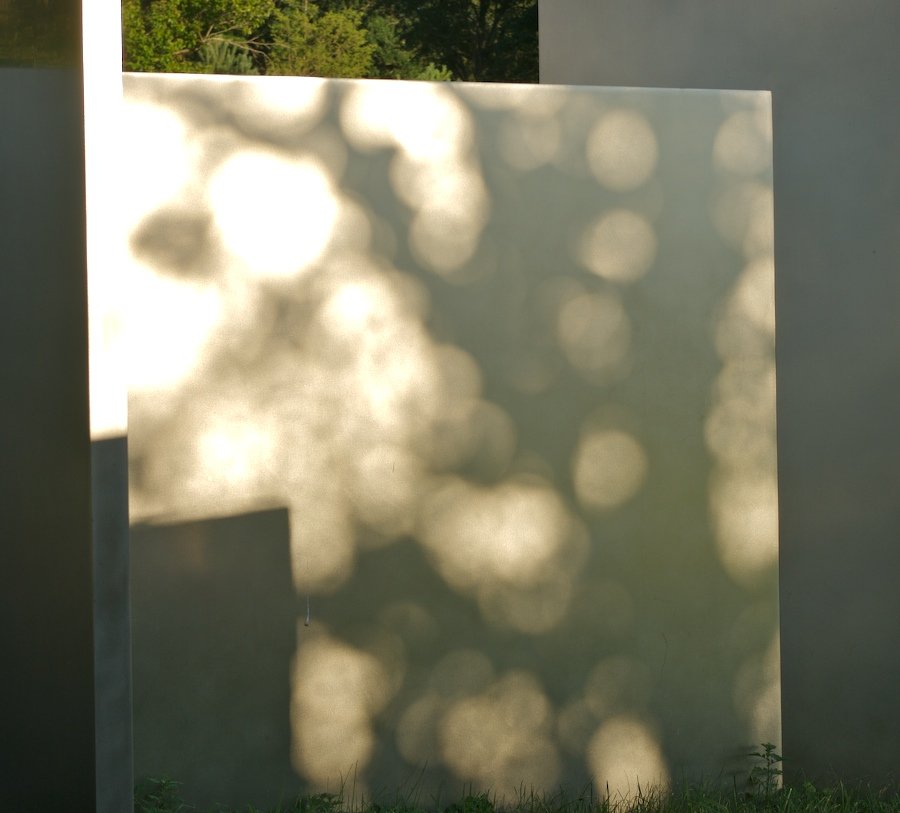
Photo courtesy: https://www.edwardtufte.com/notebook/dappled-light/
Why do I love the pattern so much? Because it transforms any scene. Lighting is the most important element for me, as conveying an environment and mood is my favorite visual element to play with.
You can:
Adjust the distance and/or intensity of the light.
This will make the edges between light and shadow softer, or harder, as a stylistic choice.
This will also adjust the frequency of the repeating shadow shapes. This could lead to larger strokes of light (low frequency), or smaller, repeated patterns (high frequency).
Adjust the canopy to adjust the repeating shapes.
Cast dappled light onto any scene to instantly make it feel more organic. Whether is a strictly human, inorganic structure (e.g., brutalist architecture), or a simple path in nature, the cast shadow will soften up a scene.
Dappled light hits the right tones of unity and variety, which are my favorite visual design concepts - which I will absolutely never forget to mention.
Unity: The repeated, flickering shadows bring together a sense of oneness throughout a visual composition.
Variety: The arrangement of leaves are ever so slightly offset, based on a multitude of factors: viewing angle with respect to the light source, arrangement of leaves along its branch, the natural variation of leaf shapes, a million other factors.
There is so much you can play with when trying to introduce this lighting in a scene, but you should be careful to not overwhelm the overall composition. You may subtly try to attenuate the sharpness of the shadows in areas of focus as opposed to things out of focus.
Dappled light is already engaging on a flat surface. What about on a dynamic form? I think it’s also visually pleasing when dappled light wraps around a human’s face, or any other interestingly shaped objects.
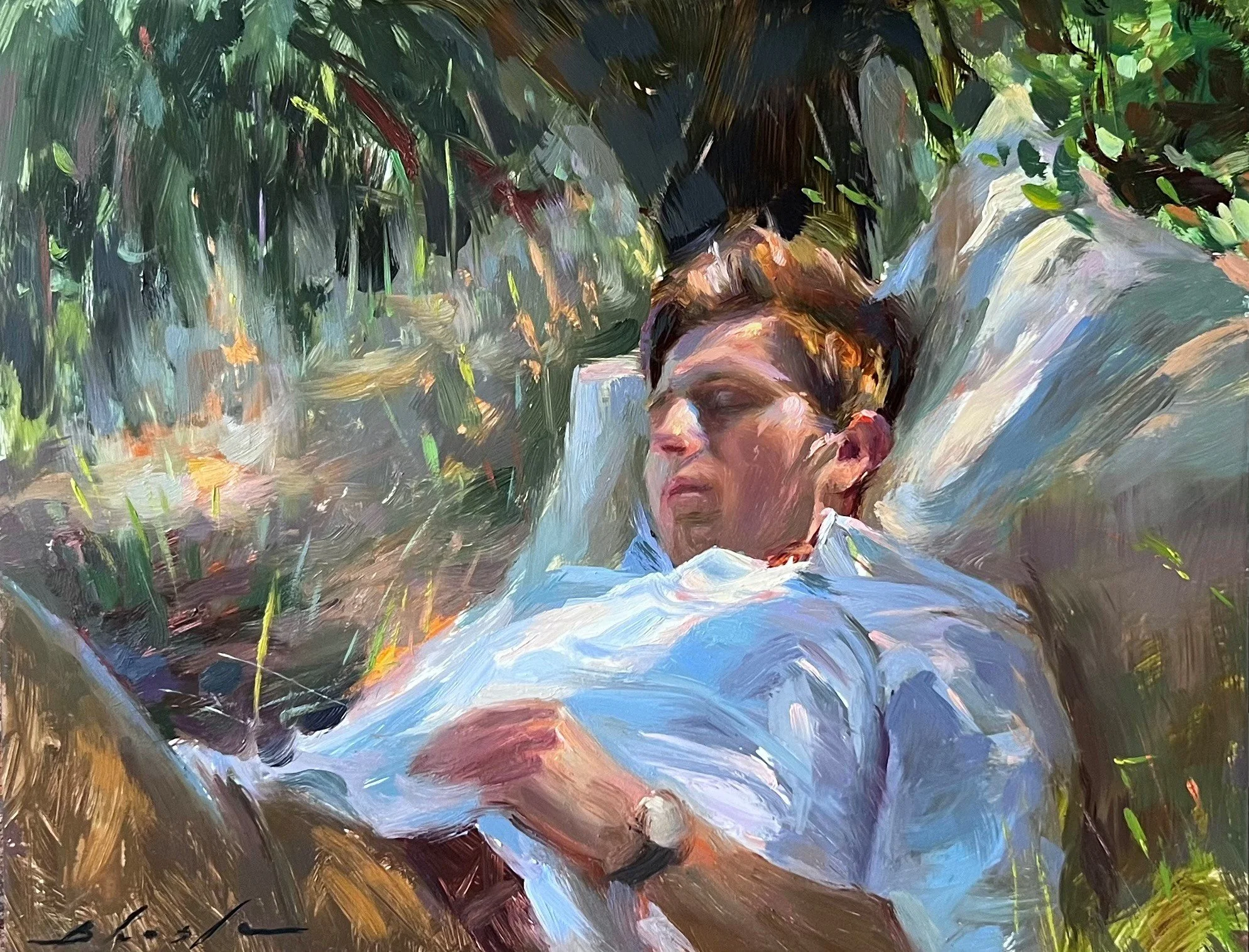
Photo courtesy: https://www.artandobject.com/marketplace/art/dappled-light (Artist: Suchitra Bhosle - https://www.suchitrabhosle.com/)
How does this lighting effect work? The space between leaves acts similar to a pinhole camera.
Approximate the spacing between the leaves as functioning as a 1:1 projection from each point along the disc of the sun, sent through a tiny pinhole, so that a reasonably sharp image of the sun forms. As the pinhole gets larger, the image gets a bit more blurry and distorted, because one light from one point of the sun reaches the same point beyond the pinhole, resulting in a composite of many images of the sun.
It took me a while to grasp this concept, because I originally thought of the sun as a “plane” of light, where all light rays originating from the sun are parallel. If you treat the sun as a point light, that is inaccurate as well, because the sun is not small enough in the sky where a “point” is a reasonable approximation. That’s why I called it out as a “disc” instead.
You can experiment by punching a small hold in a piece of paper, facing perpendicular to the sun. If the sun (or moon might be a better example) were to be irregularly shaped or eclipsed in any way, you would be the same shape forming through the hole, or even in the patterns that form observed with dappled light in nature.
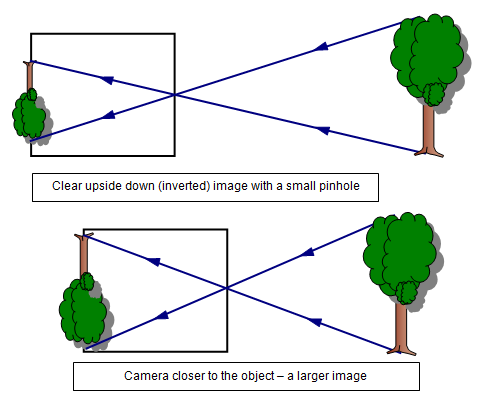
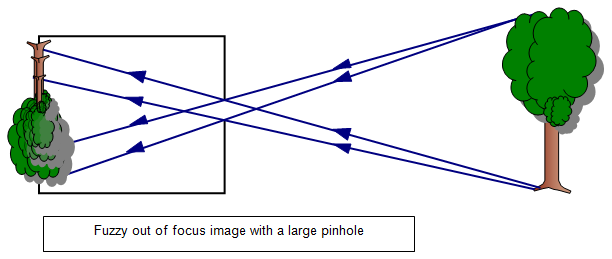
There is infinite variation from such a simple pattern that exists everywhere. You can play with the variation of edges. You can exaggerate the boundaries between light and dark by introducing color saturation - a sort of dramatized subsurface scattering effect. The dappled light doesn’t even have to be uniform across the scene. Compose the scene in such a way that complex geometry wraps the shadow pattern in interesting ways. You can introduce a “hard” or “soft” edge/gradient for any of the above visual qualities, e.g., the focal point of the composition has harder edges, and gets softer away from it. Or, the focal point has more color saturation, and so on. These examples, alongside all the other visual parameters I mentioned before. And it looks so pleasing, effortlessly.
I think it also serves as a reflection of the art I like to create. Because it often creates a sense of softness and vulnerability that I like to portray. You could still take a jagged canopy, and a close, high intensity light, to cast intrusive shapes to create a sense of eeriness, which isn’t something I would take to my own art.
However, it is this foundational understanding and approach to art that I consider so important to being the best artist you can. Cheers!